Start with what the pier is for
Chatham’s Fish Pier serves a commercial fishing fleet. The town describes a fish-packing building, observation deck, wharf areas, and the movement of catches from vessels to trucks. That working purpose should shape a visitor’s expectations. Use designated visitor areas to observe whatever activity is taking place, and allow room for the people doing their jobs. A useful question for children is how a catch moves from a boat into the wider food supply. The answer may involve equipment and buildings as much as a vessel arriving while you happen to be there.
Keep observation separate from access
The town identifies marked pedestrian areas and parking arrangements at the pier and asks visitors to keep clear of commercial operations. Follow those markings rather than following another visitor toward a promising viewpoint. Its information also discusses construction work, so look for the latest local notices and barriers instead of assuming that an older project completion estimate proves every route is available. Wildlife sightings are incidental. Watch from a distance, leave animals undisturbed, and follow the town’s instruction not to feed seals. This visit works best as a brief look at a functioning waterfront, with no promised unloading time or animal encounter.
Make the lighthouse area a short, distinct stop
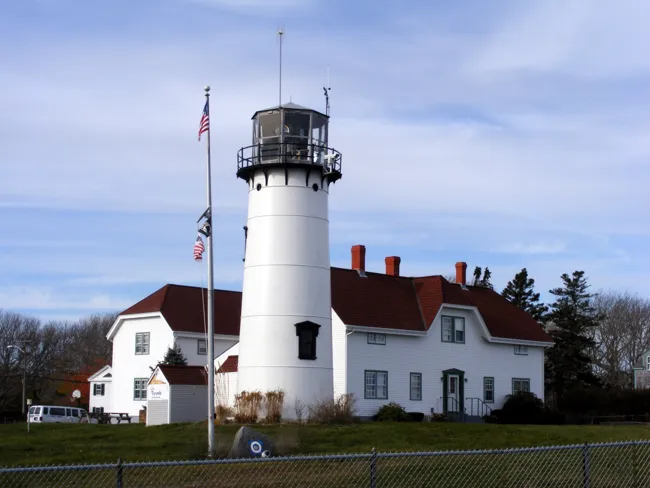
Chatham’s parking page distinguishes the Lighthouse Beach Overlook from beach parking elsewhere and describes a short-stay limit at the overlook. Plan this portion accordingly; it is not a parking base for an extended museum visit or afternoon elsewhere. The town’s lighthouse page carried a maintenance-related tour closure when researched on October 20, 2026. Check that page for any later change, and describe the outing as an exterior-area visit unless a tour is explicitly available. Seeing the light, going onto the beach, and entering the tower are three different plans with different access requirements.
Use Atwood to supply the historical context
The Atwood Museum, home of the Chatham Historical Society, is at 347 Stage Harbor Road. Its collections combine a historic house with museum galleries and outdoor exhibits. The society describes a Chatham Light display containing a lantern house and Fresnel lens, which creates a particularly useful connection with the lighthouse-area stop. Start with navigation or maritime history, then follow another subject that catches your attention. The museum’s own seasonal calendar governs gallery access; archives, administrative offices, and special appointments can operate differently. Confirm a normal museum visit rather than interpreting an office opening as access to all exhibits.
Choose the order around one firm commitment
If Atwood is the main reason for the trip, secure its opening window first and let the outdoor stops remain flexible. If the waterfront is the priority, keep a museum visit as a separately confirmed addition. Put the pier, overlook, and museum on a map before setting off, then choose legal parking for each part instead of attempting to hold one short-stay space all day. In poor weather, a focused museum visit can carry the day on its own. Finish by comparing the living waterfront with the museum’s historical interpretation: what work continues, what equipment has changed, and which questions need more research?